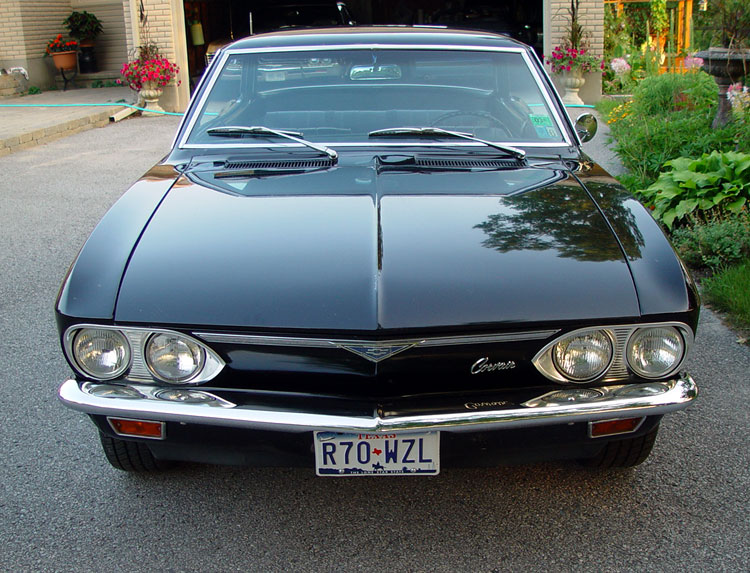
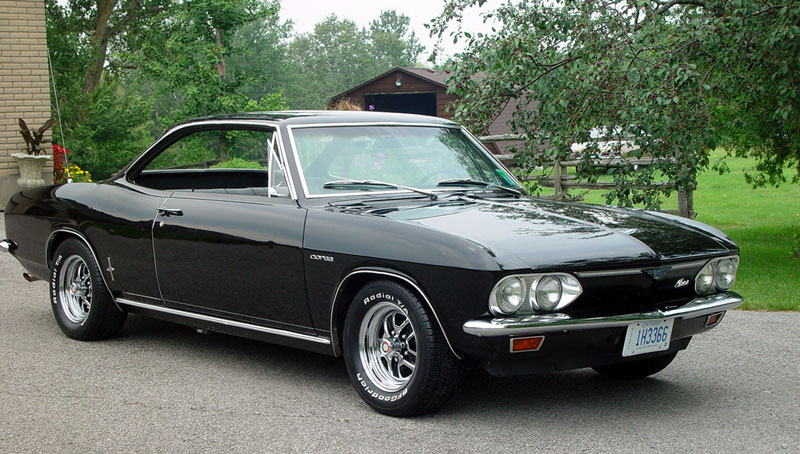
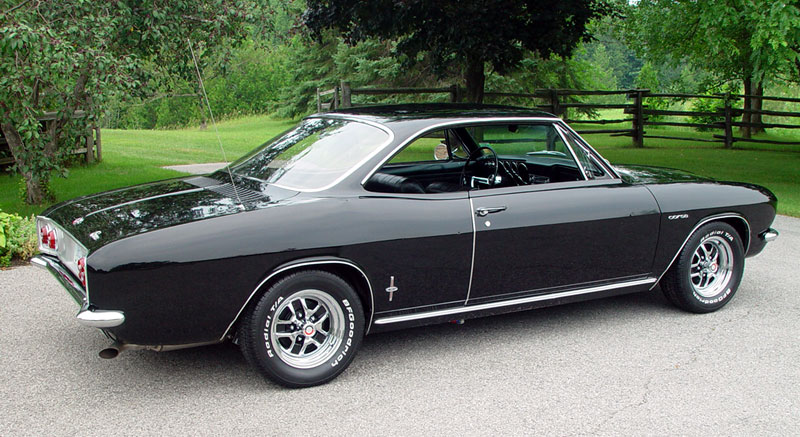
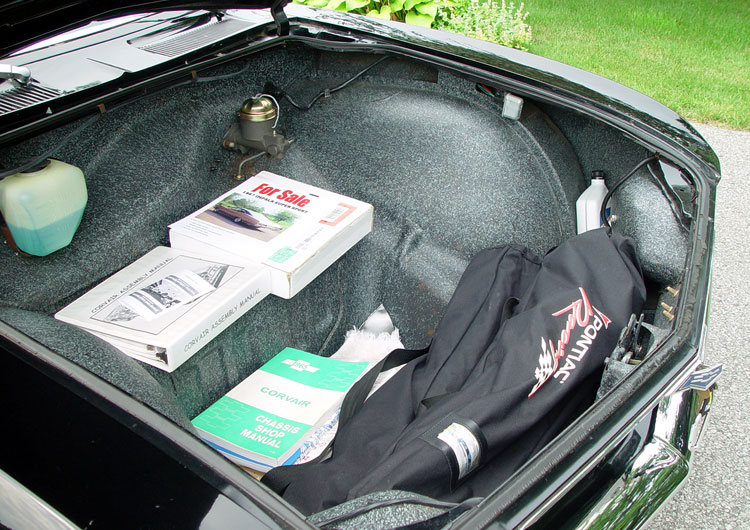
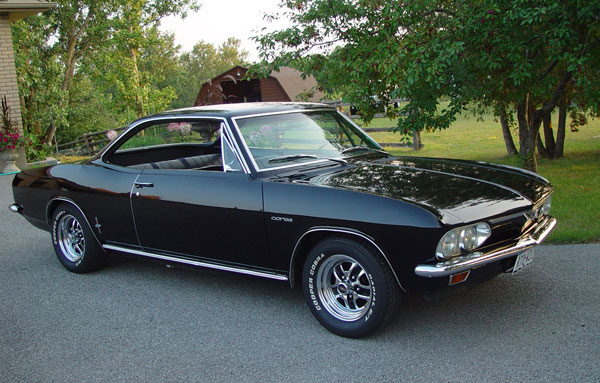
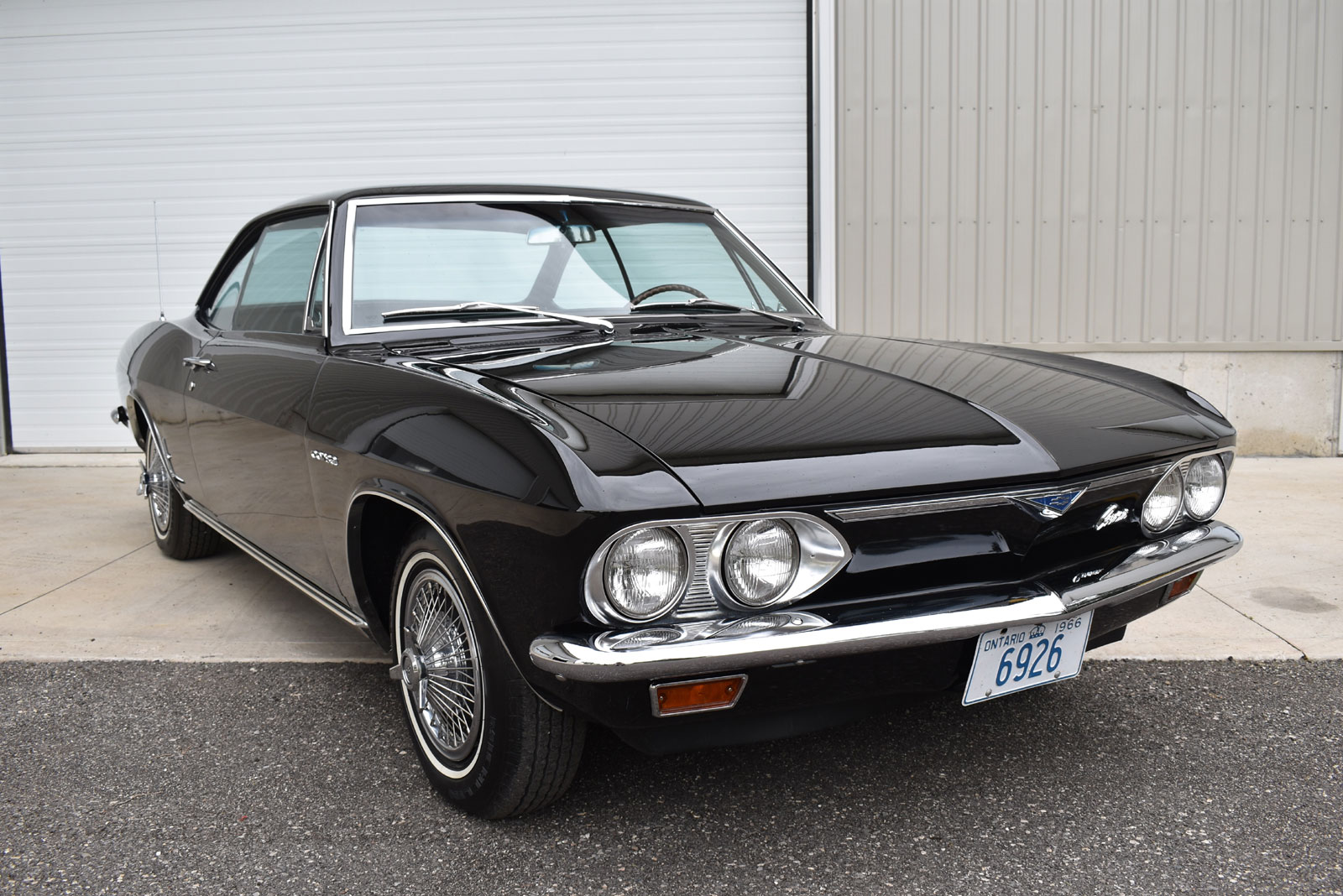
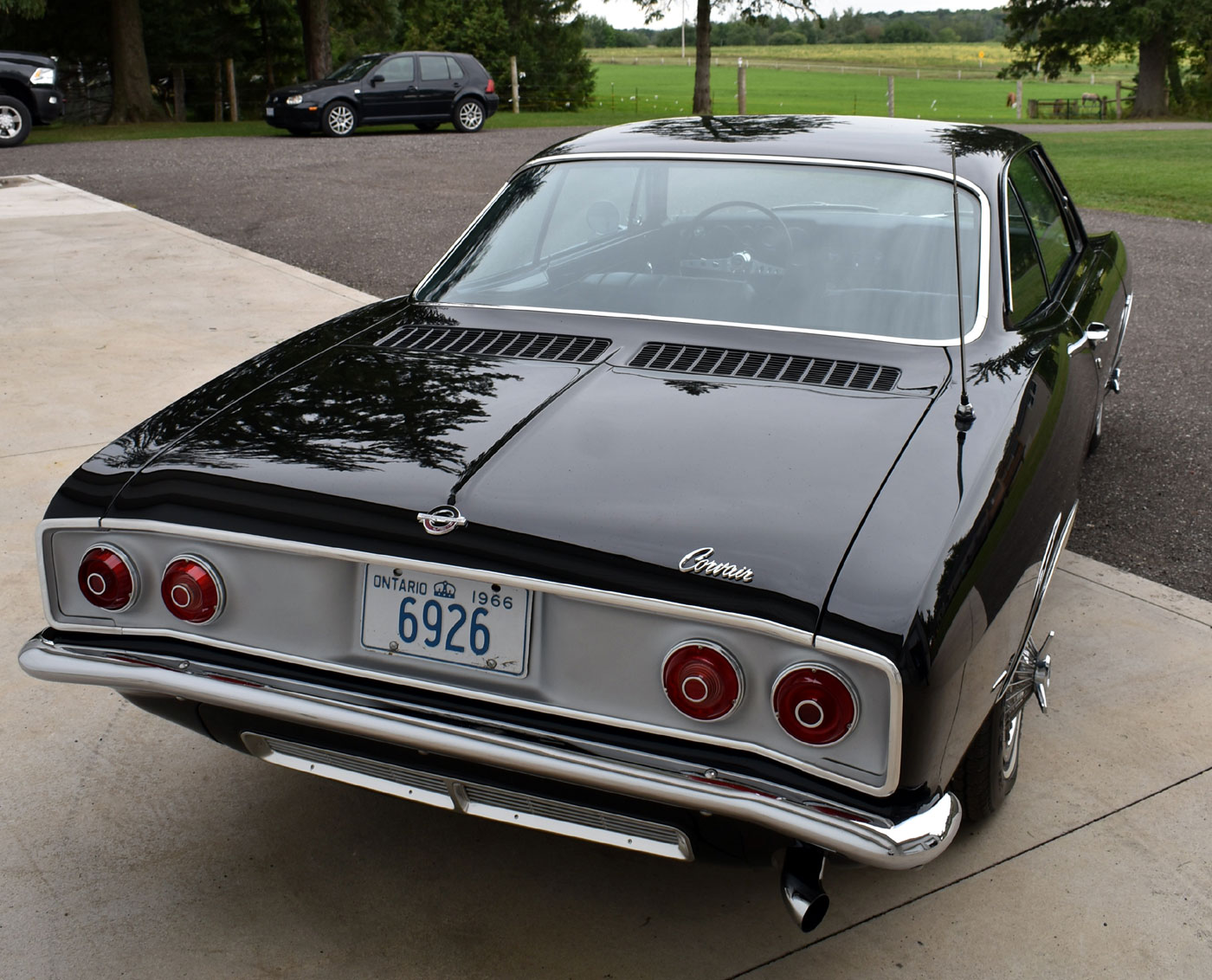
1966 Corvair Corsa - It's
Alive!

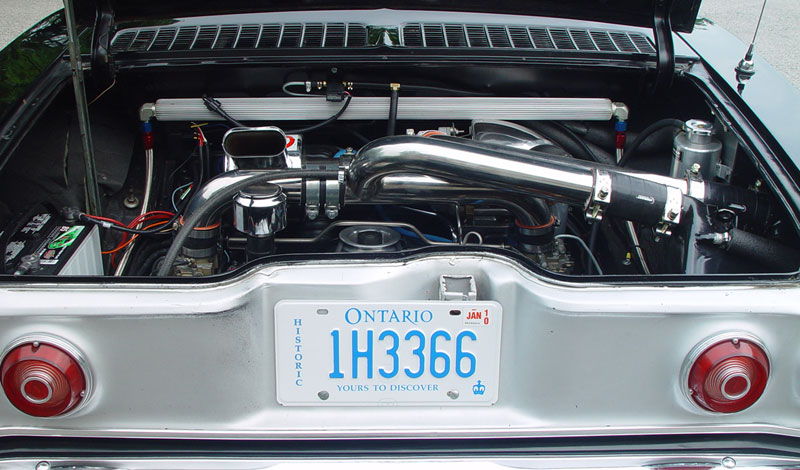
After almost 5 years of rebuilding and modifying the air
cooled flat six boxer style engine it is ready to fire.
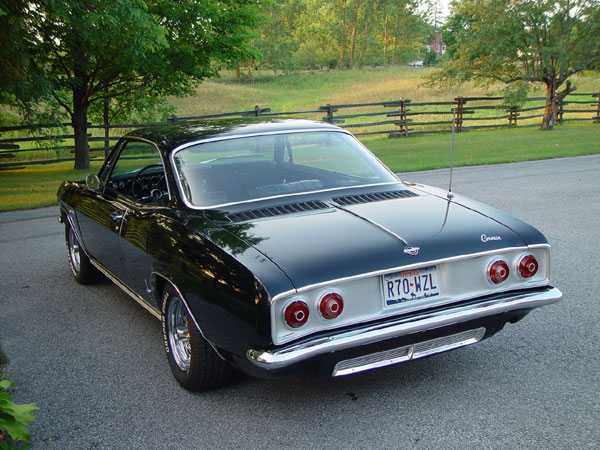
What's
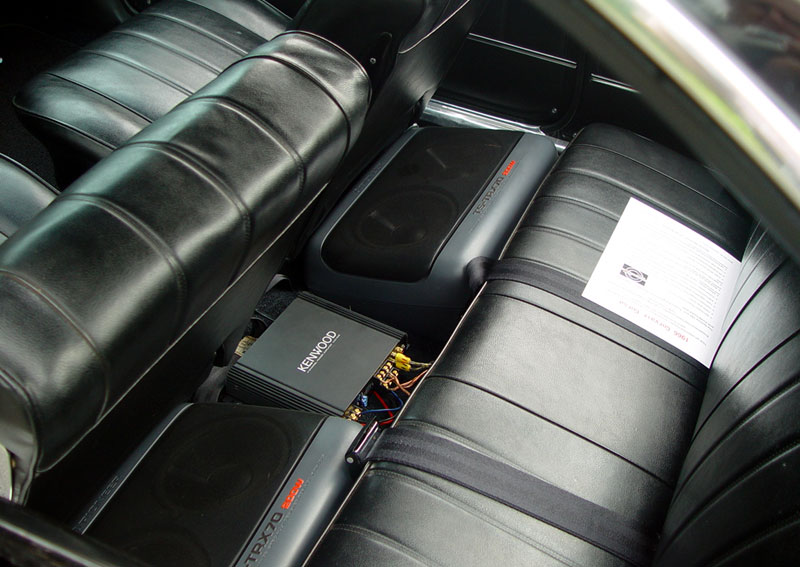
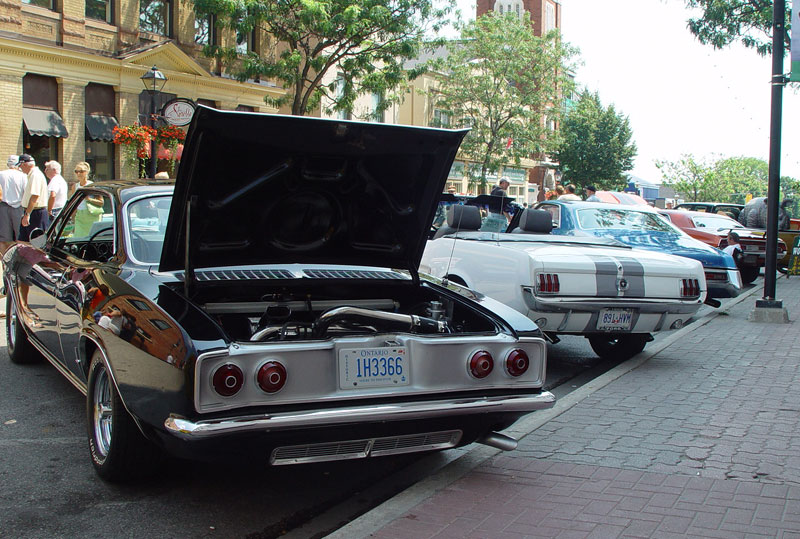
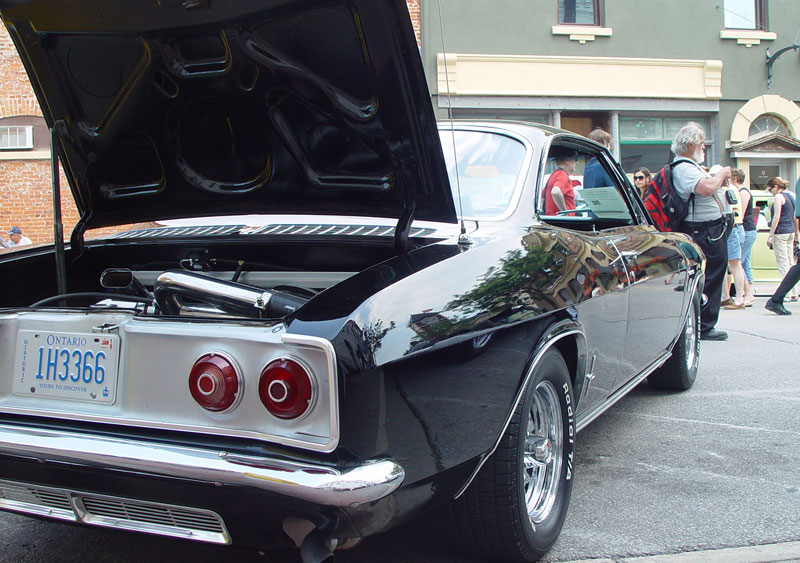
that strange noise coming from the back of car :)
FINALLY - the car moves under it's own power for the first time in 26
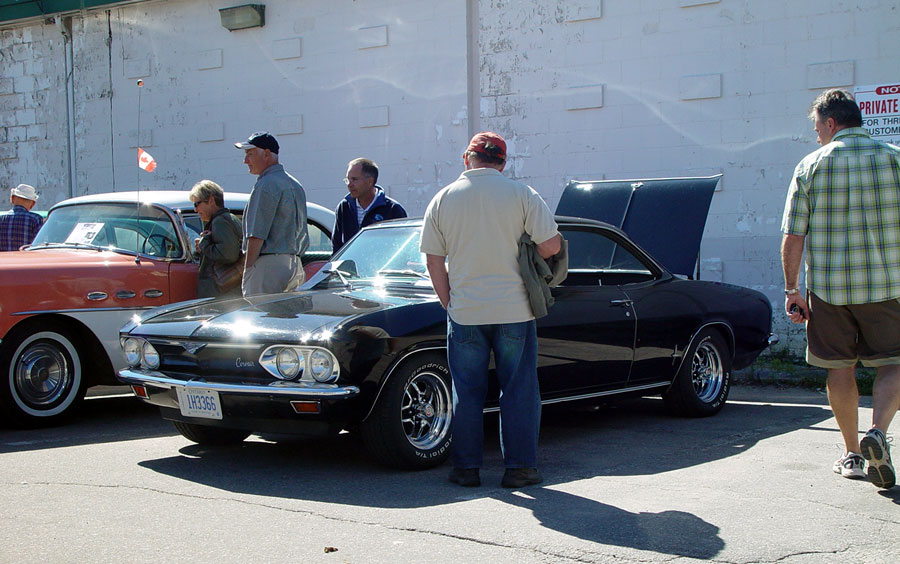
years. Paint and body is still factory original for now.
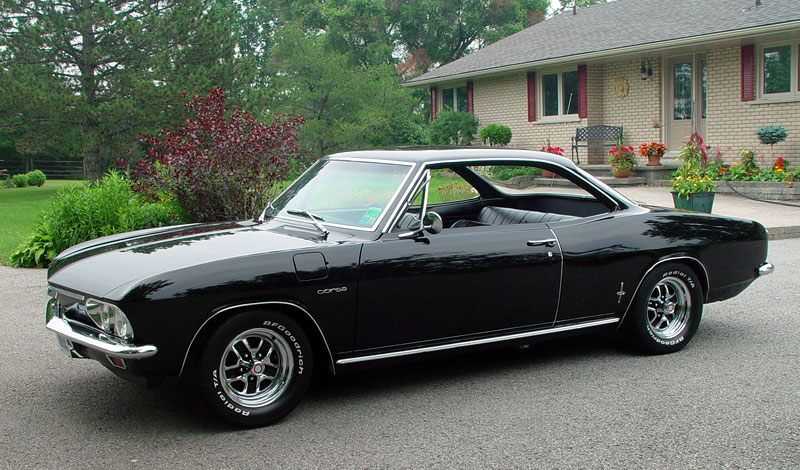
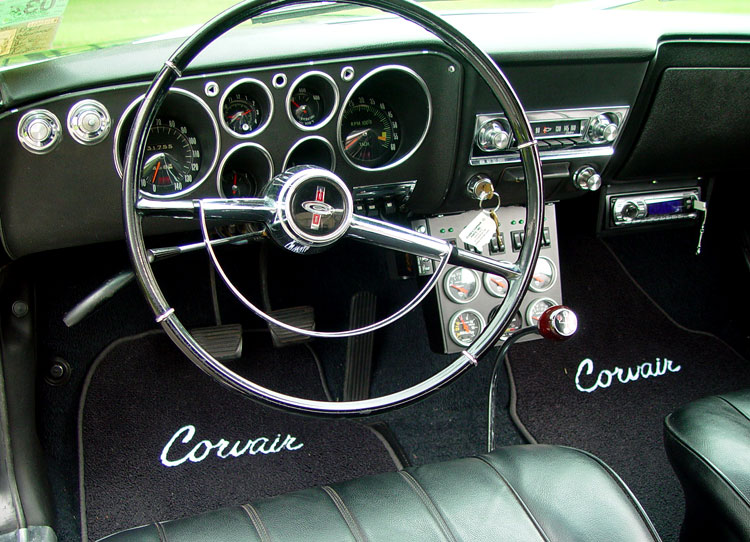
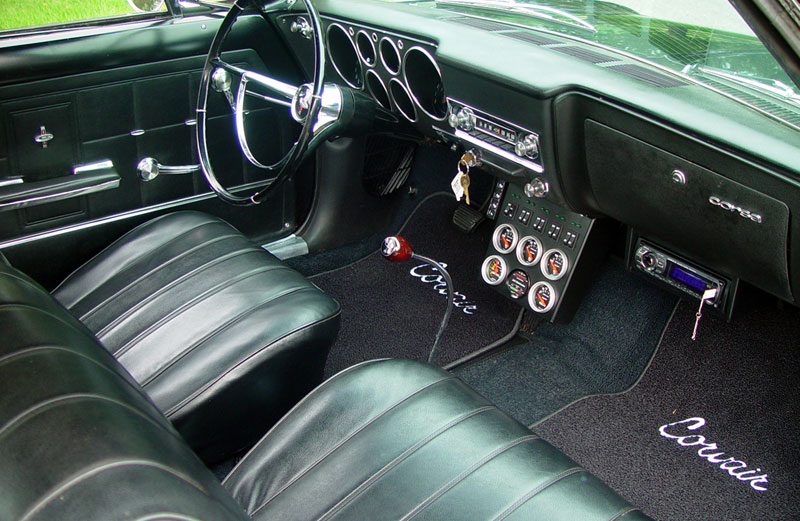
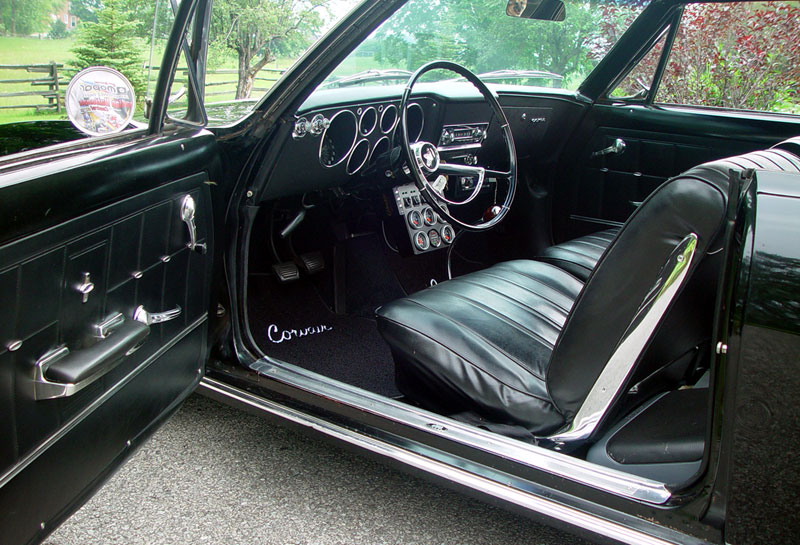
Interior is mainly original, stereo in back seat is
temporary
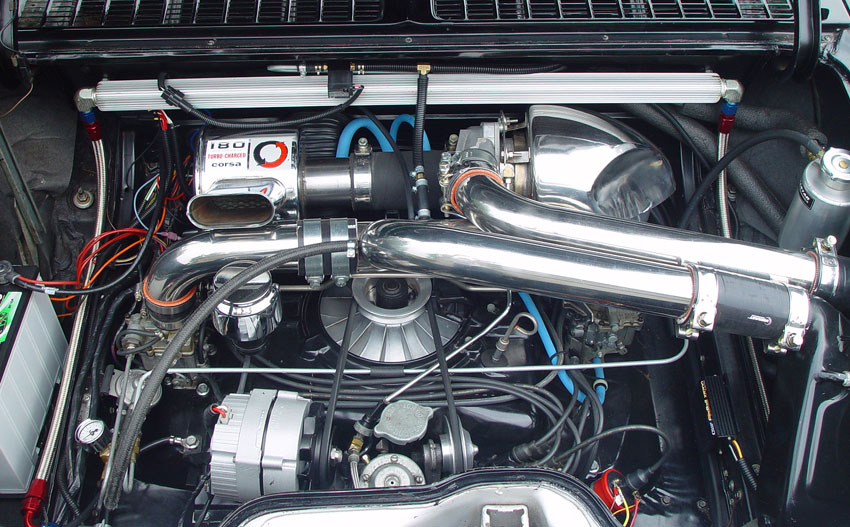
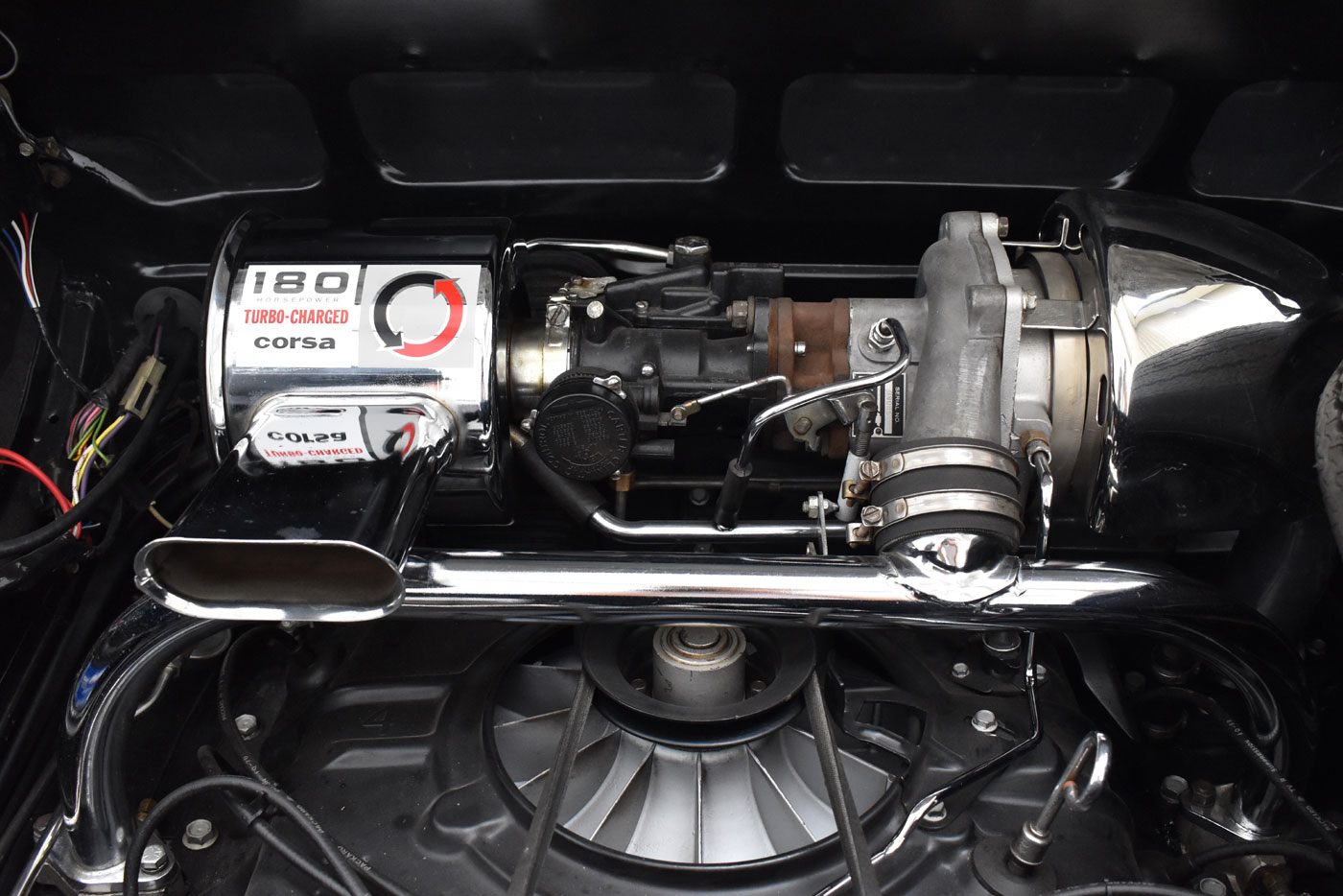
The motor is ......uh......somewhat modified!
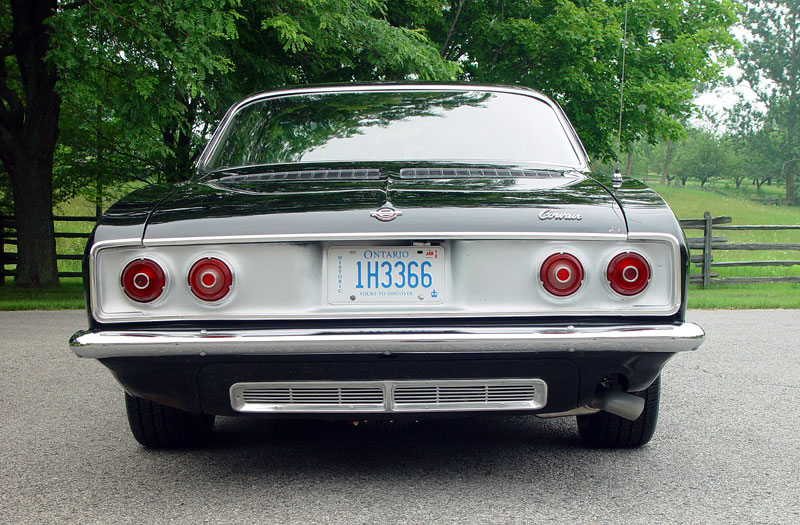
Before
After
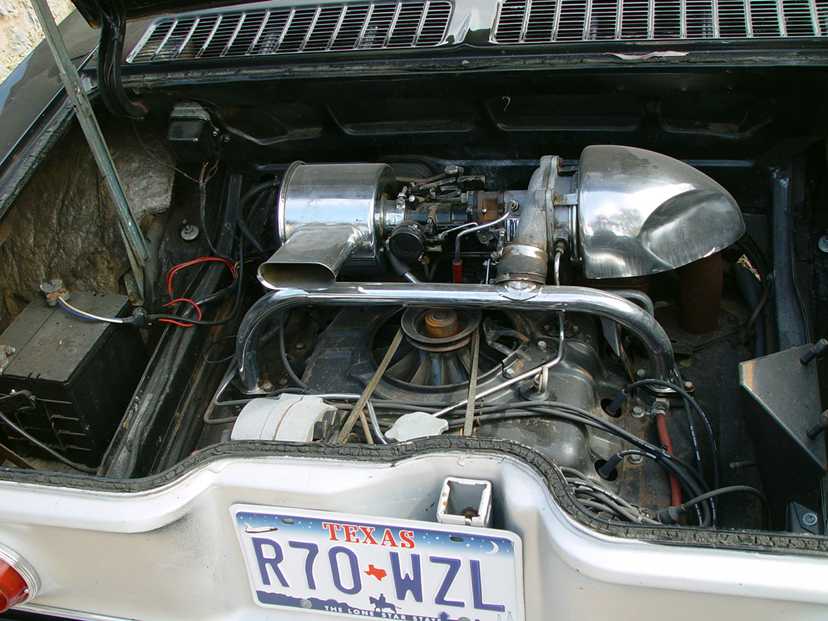
The Modifications To the
Power Train
This photo has a summary of a lot of the parts that have been added
or modified for this motor
Entire exhaust (including the turbo) is ceramic coated to increase exhaust
flow, keep the heat in for the turbo and out of the engine bay, and it will look
good for a long time too.
Modified Rajay turbo with a Crown scroll that picks up low speed performance,
larger overall size increases top end performance
The stock turbo induction system had one draw through carb ahead of the Rajay
turbo charger. The factory carb was purposely sized by GM to limit boost and
prevent detonation which could destroy the motor. The current setup uses other
methods to control detonation so a larger turbo, inter-cooler and two blow
through carburetors are installed.
The modified Rochester HV carbs have the main jets increased in size and
relocated to the sides of the fuel bowls, the float chamber vents are extended
above the air horn about 3" and the throttle shafts are pressurized to
prevent air and fuel being forced out under boost.
This picture of the air horn shows the extended bowl vents at the top plus
the two smaller boost reference tubes leading outside to the rubber hoses that
pressurize the throttle shafts
The underside of the carb top shows the bowl vent extensions, on the right
side is the check ball style inlet that replaces the stock needle and seat
setup.
The throttle shafts are pressurized by the boosted air coming in the top of
the carb
The fuel system uses a boost compensating fuel pressure regulator from a
Maserati Bi-Turbo motor as they were designed to supply two carbs on a
turbocharged engine. Factory fuel lines were replaced and upgraded to larger
ones, the factory mechanical fuel pump has been replaced by an electric at the
front of the car.
A Turbonetics adjustable waste gate in the exhaust just before the turbo is
used to control boost through the entire rpm range
GReddy cockpit boost controller, connected to the Turbonetics waste gate
above it adjusts rate of boost and maximum boost
level of the turbo system.
The stock GM points ignition system has been replaced by a Crane Fireball XR700
electronic system that feeds into a J&S Electronics Safeguard knock sensor and adjustable ignition timing
controller.
It has a digital read out that displays the amount of knock retard (plus fuel
mixture from an O2 sensor).
The finned tube at the top of the picture is an auxiliary oil cooler with a
bypass thermostat to help with engine cooling.

All of the additional hardware and the controls and gauges to
monitor them has meant some major changes to the stock factory wiring. I've
installed a second factory wiring harness from front to back of the car (16
conductors) and had a custom gauge and control pod made by M.C. Lazer Werks
in Barrie ON. http://www.mclights.com They do nice "Werk"!
The air to water inter-cooler system took the most
engineering - especially since this is an air cooled car!
This is the main part of the system, the inter-cooler originated in a Saab
and is known for it's efficiency.
The other components are:
Reservoir tank - sourced from Bayside Auto - used in stock cars, it has a 4
psi rad cap to protect the system from thermal expansion
Inter-cooler pump - sourced from the supercharged Ford Lightning pickup truck
Heat exchanger - sourced from Bayside Auto it's the same as the engine oil
cooler, only longer
The complete system in the car

Return to the Corvair Page or Return to Home Page